FBA Phase I Review
Looking back at Forest Business Alliance Phase I and moving forward with Phase II
Abstract
A look back review of the first two years of the Forest Business Alliance. FBA achieved success at starting up, providing technical assistance to businesses and nonprofits in the wood product sector across California, and created key resources including a website, proposal templates, the FBA guide, YouTube channel, and workshops on critical topics. Generally, the proposed metrics were met during Phase I of the project, particularly for technical assistance and capacity-building targets.
Takeaways
Creating a successful new business is not just about having a good idea; it’s about structuring your effort appropriately for the financing needed to get started. This means understanding all aspects of your proposed idea, so you have a workable business plan. FBA participant
Table 1 summarizes the pluses (what went well) and deltas (what we would change) for FBA Phase I. Technical assistance was well-received and helped participants, and workshop turnout and participation were high, especially for funding and finance topics. The peer learning network was greatly appreciated for networking opportunities, but live webinar participation fluctuated widely. Table 2 provides a summary of project achievements according to metrics. Highlights include 136% of bdt treated, 107% successful proposals, and more than 100% for the total number of workshops and participants.
Table 1:Summary of pluses (what went well) and deltas (what we would change) for FBA Phase I. Current pluses/deltas listed are for illustrative purposes only and will be updated following a more detailed review.
| PLUSES | DELTAS |
|---|---|
| Technical Assistance | |
| 🟢 Providing direct TA to BWD program applicants | 🟡 More targeted TA |
| 🟢 Tribal TA | 🟡 Funding gap |
| 🟢 Funding and finance options | 🟡 Office hours sparsely attended |
| 🟢 Useful resource/reference tools | 🟡 Expand to new statewide programs |
| 🟢 Geospatial and contact databases | |
| Workshops | |
| 🟢 Tribal workshops | 🟡 Varied attendance |
| 🟢 Funding & finance best attended | 🟡 Best turnouts during grant rounds |
| Peer Learning Network | |
| 🟢 Created network | 🟡 Need to better connect businesses |
| 🟢 Tribal PLN | 🟡 Change to sector-specific sessions |
| 🟢 High participation around grand deadlines | 🟡 Increase on-ground presence |
| 🟢 Sierra Institute field trip | 🟡 Increased field visits |
Background
The Forest Business Alliance provides technical assistance, delivers workshops, and facilitates a peer-learning network to increase local and regional capacity for applicants to CAL FIRE’s Business and Workforce Development Program. Funding for the Forest Business Alliance is provided by the CAL FIRE Business and Workforce Development Grant Program. Past funders include the Yuba Water Agency and the USDA Forest Service.
The Forest Business Alliance is intentionally structured to deliver three core components to participating businesses and nonprofits: technical assistance, workshops, and a peer learning network. This three-pronged approach combines bottom-up and top-down assistance strategies to build organizational capacity across the sector. The model enables the program to get critical information to organizations in need quickly and efficiently while fostering long-term sustainability and collaboration.
Metrics
Table 2 provides a summary of FBA accomplishments by category for Phase I. These numbers reflect projects that FBA provided technical assistance to and that were funded through the Business and Workforce Development Program. Successfully funded projects were a mix of wood processing facilities and workforce development initiatives. Many of the business development projects FBA has assisted with are not yet processing wood, so the BDT for solid wood processing will continue to increase as grant recipients implement and scale their work.
Table 2:Summary of key metrics and accomplishments for FBA Phase I. CALFIRE Business and Workforce Development Metrics, along with FBA-developed technical assistance and capacity-oriented metrics tracked during FBA Phase I. Percent achieved amounts are from proposed targets.
| Category/Metric | Amount | % Achieved |
|---|---|---|
| CALFIRE Metrics | ||
| B. Biomass Treated or Generation Capacity (BDT) | 13,595 | 136 |
| C. Forest Sector Jobs Created | 573 | 76 |
| F. Forest-Sector Workers Trained | 195 | 78 |
| G. Certifications Earned | 273 | 91 |
| Implementation Metrics | ||
| Contacts made | 774 | 155 |
| Proposals submitted | 48 | 96 |
| Successful proposals | 17 | 113 |
| Workshops | 39 | 195 |
| Workshop participants | 559 | 112 |
| PLN meetings | 29 | 116 |
| PLN participants | 587 | 1,468 |
| List-serv Members | ||
| Peer Learning Network | 45 | n/a |
| Forest Business Alliance | 157 | n/a |
Review
We reviewed the Forest Business Alliance through internal and external processes to assess program effectiveness and inform future directions. The external review included personal communications and surveys distributed to FBA participants to gather feedback on their experiences and outcomes. Internal review took the form of a facilitated staff meeting that systematically examined the pluses and deltas of each program component and carefully considered next steps for program development.
Startup Progression
Throughout Phase I of FBA, we tracked contact stages from initial identification to funded proposal status (Figure 1). We also included collaborator stages, such as source and participation, to capture other types of network involvement. Identified, participating, and source category numbers were high at the start of the project, and technical assistance was steady but increased dramatically in 2025 as more applicants learned about the Alliance and contacted us for help.
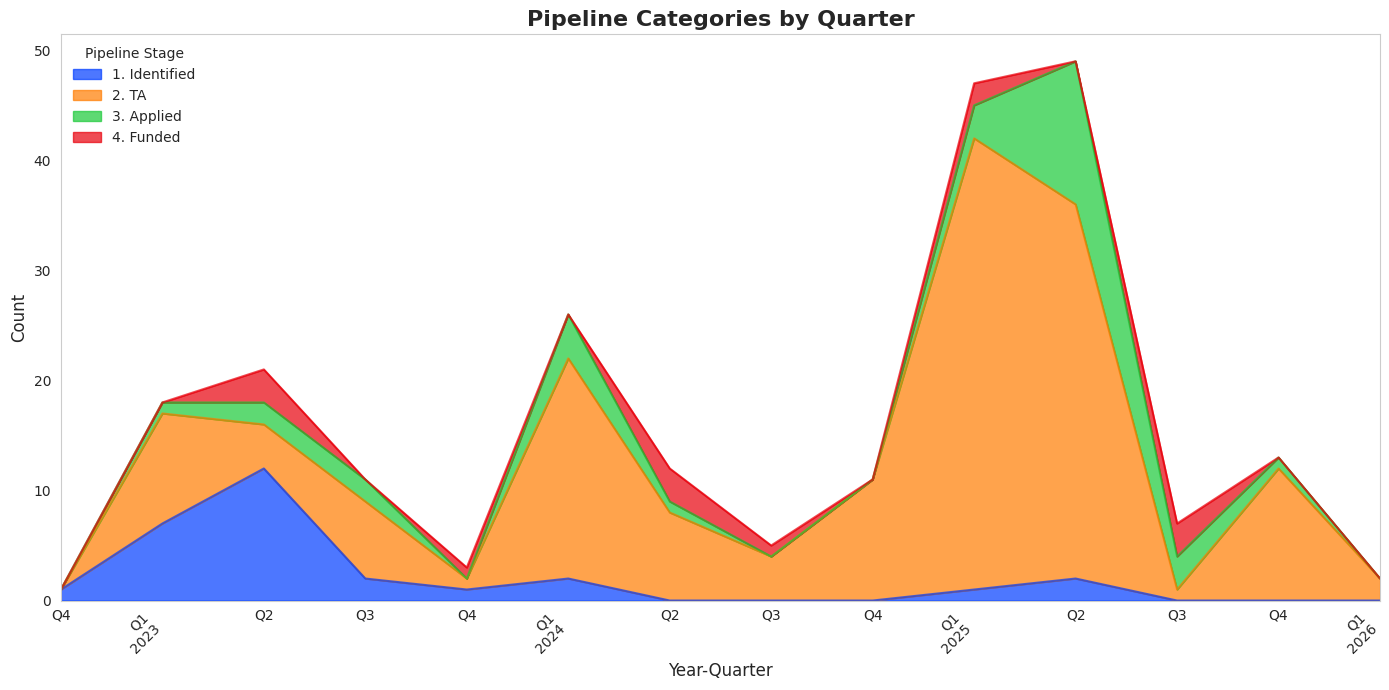
Figure 1:Progression of FBA vpipeline technical assistance.
Examined in a different manner, cumulative technical assistance rises dramatically over time, while numbers for other pipeline stages roughly stay the same Figure 2.
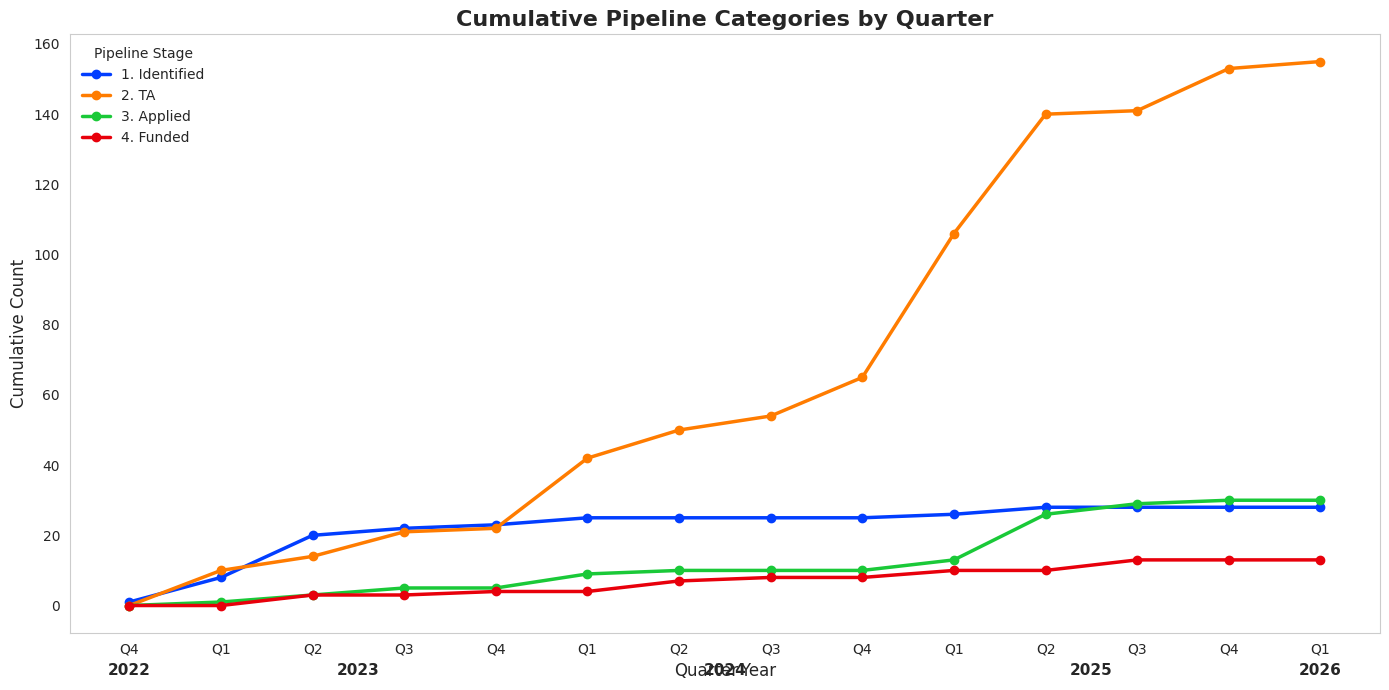
Figure 2:Cumulative pipeline categories over time.
Technical Assistance
Technical assistance was a core strength of FBA Phase I, providing direct support to BWD applicants, specialized Tribal TA, and comprehensive resources, including funding and finance options and geospatial/contact databases for wood products businesses, helping build sector capacity. However, several opportunities for improvement emerged: TA delivery needs to be more strategically targeted, a funding gap was identified, office hours saw sparse attendance, and the program needs to expand into additional statewide programs. These deltas suggest that while the foundation of TA provision is solid, the program should refine its delivery mechanisms and extend its reach to maximize engagement and impact.
Workshops
FBA delivered 39 workshops to 559 participants, exceeding the target by 195% and total participants by 112%, with tribal workshops and funding & finance sessions drawing the strongest attendance. Participation varied significantly across workshop types and timing, reflecting inconsistent interest or scheduling challenges. Workshops tied to grant deadlines consistently saw the best turnout, suggesting participants prioritized sessions when facing immediate funding deadlines. Funding & finance workshops resonated most because applicants needed specific knowledge to complete proposals for funders. Phase II should anchor the workshop schedule to grant cycles and continue emphasizing tribal and funding-focused offerings.
Peer Learning Network
“I left each Peer Learning Network meeting feeling inspired and made contact with many members afterward.” Mika Cook, Sustainable Rural Forest Community Strategist, Humboldt
Strong participation around CalFire grant deadlines suggests PLN was perceived as a strong CalFire support group specializing in grant funding. The in-person PLN meeting at Sierra Institute was well attended, and participants built strong peer-to-peer and organizational connections (though qualitative and hard to document). Another approach could be to change to a business-specific network, e.g., mills or biomass-only sessions. One participant also noted that financing wood products businesses is a key need for their startup.
“The amount of experience in the wood products industry to lend ad hoc expertise is limited. I really appreciated the speakers, field trips, and networking provided by the Network.” Temra Costa, Regenerative Forest Solutions
Next Steps
It is clear there is a need for capacity building and technical assistance for businesses and nonprofits in the wood products sector. In particular, needs are highest around organizational structure/mission, business planning, proposal writing, funding, finance, and grant administration. The following steps are based on feedback from businesses and nonprofits that FBA is assisting, as well as our collective experience over the initial project term. The following are the highest priority items:
Focus on technical assistance & key workshops. Direct technical assistance was one of the most effective forms of support FBA provided. Whereas connecting with new and existing organizations was initially challenging, this has significantly improved. Workshops drew the strongest attendance during grant rounds, particularly when focused on proposal development and funding from sources such as agencies, banks, foundations, and private investors.
Reconfigure the Peer Learning Network or focus on specific topics with similar businesses. Tribal PLN was well attended. PLN was well attended at grant rounds or with key speakers (e.g., River City Bank). But attendance was low in the latter half of Phase I. Focusing on a network of businesses that need it, or creating ad hoc networks when the need arises, might be a better approach.
Continue funding Tribal Workshops. These have been very well attended and in high demand for a variety of topics. Creating additional or follow-up resources with the workshops could supplement capacity building.
Expand outreach to unsuccessful grant applicants. Recent efforts show measurable success in targeted assistance for applicants who needed help refining grant applications, strengthening sections, or adding specificity to other portions of their grants.
Continue communications & outreach. Growing awareness drives organic inquiries and CAL FIRE referrals. Existing materials (Guide, website, webinar/workshop recordings) effectively introduce FBA and extend reach.
Conduct further analysis comparing Tribal PLN vs. general PLN participation metrics and implement systematic outreach to new startups and nonprofit programs, especially in regions with low application rates or limited grant-writing capacity.
An additional review of differences in Peer Learning Network participation between the general PLN and the Tribal PLN would be helpful. Systematic outreach to new startups and nonprofit programs is a feature of the technical assistance that should continue, especially in regions with fewer applicants or lower capacity to apply.